How to Wash a Muddy Car in Nanaimo Without Scrubbing the Paint
By Detail Boss · November 25, 2026
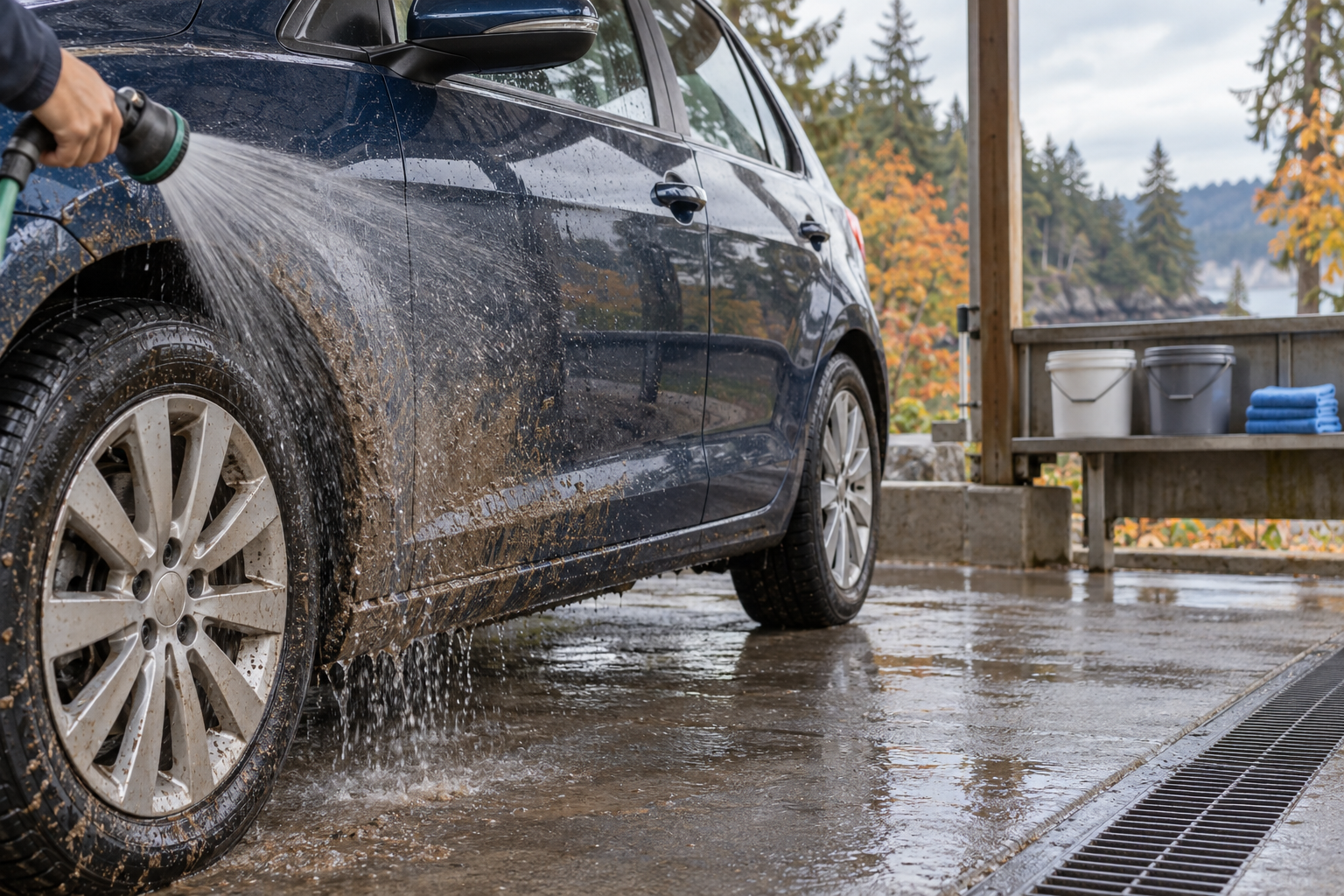
To wash a muddy car in Nanaimo while reducing the risk of scratching its paint, remove loose grit with water before touching the bodywork. Then use a compatible car shampoo, clean wash equipment and light pressure, followed by a thorough rinse and careful drying. Do not scrub dried mud or wipe a dirty panel with a dry towel.
Late-autumn journeys on Vancouver Island can leave lower doors, sills and wheel arches carrying muddy splash. This guide is for that typical seasonal cleanup, rather than a report of today’s weather. The important decision is when the surface is ready for a wash mitt: visible grit should be rinsed away first, even when you are short of time.
Check the finish and set up before getting wet
Read the cleaning section of your owner’s manual and any instructions for paint protection film, a wrap, a matte finish or a recently applied coating. These surfaces may need different products or waiting periods. Do not assume a bottle suitable for ordinary glossy paint is suitable for every exterior material.
Choose a permitted wash location with appropriate drainage and enough space to work without stretching across the car. Check that the footing is secure and there is no ice. Have your equipment ready before starting; an interrupted wash can leave products sitting on panels longer than intended.
- Car shampoo compatible with the vehicle’s finish and existing protection.
- Clean buckets, a soft wash mitt and a dedicated drying towel.
- Separate equipment for wheels and the dirtiest lower areas.
- A suitable water supply and the vehicle’s instructions for rinsing sensitive parts.
- A clean place to set tools down, away from grit.
Inspect the paint for peeling edges, chips or loose trim. Point these out when arranging professional work. A wash is also a good opportunity to notice a concern before choosing a stronger treatment.
Rinse muddy deposits before contact washing
Start with water to loosen and carry away loose soil. Give lower panels and wheel arches attention without poking tools into openings or dismantling anything. Let the rinse do the initial work; a towel pressed into a muddy splash can move the grit across the finish.
Tesla’s Model Y cleaning instructions, for example, call for flushing grime and grit away before washing, including mud around wheel wells and panel seams. That is an example of a manufacturer’s sequence, not a substitute for your own vehicle’s manual.
If using a pressure washer, check both the equipment and vehicle instructions for the permitted nozzle, distance and areas to avoid. Moving closer is not the automatic answer to stubborn dirt. If you cannot rinse an area safely or mud remains firmly attached, pause and ask for advice instead of scraping it off.
Keep grit out of the wash mitt
Prepare shampoo at its labelled dilution. A stronger mixture is not automatically a better choice, particularly when the car has existing protection. Keep the wash mitt clean throughout the job and replace rinse water when it is visibly dirty. If the mitt falls on the ground, take it out of use until it has been properly cleaned.
A two-bucket arrangement gives you a separate place to rinse the mitt before returning it to the shampoo. Work in manageable sections from upper panels towards the dirtier lower bodywork, using gentle passes. Rinse away shampoo before it dries. Autoglym’s washing guide describes pre-rinsing, separate wash and rinse buckets, frequent mitt rinsing and a top-to-bottom sequence.
Use separate wheel-cleaning tools rather than moving them onto the bonnet or doors. Autoglym’s equipment guidance also suggests a separate wheel-rinsing bucket. The purpose is straightforward: keep dirt collected from one area from being carried onto another.
Our alloy-wheel cleaning guide covers choosing a method for the wheel finish. Complete that separate task with its own equipment, then return to clean bodywork supplies.
Stop scrubbing when the problem changes
After the ordinary wash, look at anything that remains. A black speck, a pale ring and a fine line in the finish should not all receive the same treatment. Describe what you see and where it is before reaching for a tar remover, clay bar or polish.
For isolated sticky black deposits, see our tar-spot removal guide. If the car is clean but circular marks remain visible under a light, request a paint assessment. Repeated washing is not a reliable way to decide how much correction a finish needs.
Avoid making an entire car a test area. Tell the detailer about previous repairs, products already applied and any uncertainty about the finish. Agree the next step after inspection rather than expecting a guaranteed result from a photograph.
Rinse, dry and review the result
Rinse thoroughly, then check the surface before using a drying towel. If there is still dirt on a panel, revisit the cleaning step instead of using the towel to finish removing it. Keep the towel clean and use gentle handling; swap it for another if it becomes contaminated.
Drying deserves a place in the appointment or home-wash plan, even on an overcast autumn day. Avoid treating rain as the final rinse. Once the car is dry, review the result in useful light and note areas that need a separate conversation.
If you have an existing ceramic coating, follow its maintenance instructions and tell your detailer when it was applied. New coating may have specific restrictions before its first wash. Our rainy-season coating-care guide explains the separate maintenance question.
Choose a detailing scope that fits the car
Detail Boss’s current exterior services include professional hand washing, with decontamination and polishing included in selected packages. Describe the amount of mud and the main concern when enquiring about mobile detailing in Nanaimo. Include photographs of lower panels and explain the available access and shelter.
If your priority is persistent visible marks after cleaning, ask about paint correction in Nanaimo before adding it to the booking. Cleaning scope, finish condition and expectations should guide that choice.
Frequently asked questions
Can I just wipe muddy doors between washes?
Do not dry-wipe visible mud and grit. Arrange a suitable rinse and wash, following the finish’s instructions, before using a cloth on the paint.
Does a two-bucket wash guarantee no scratches?
No. It helps manage contamination, but clean equipment, pre-rinsing, suitable products and gentle handling still matter. It cannot undo existing damage.
Should a muddy car automatically get polished?
No. Start by cleaning and assessing it. Discuss polishing only when the clean finish and your goals justify that separate step.
Book a late-autumn exterior refresh
Book Detail Boss detailing online or request a quote with vehicle details and photographs. Explain whether you need ordinary muddy-road cleanup or an assessment of marks that remain after washing so the team can recommend an appropriate scope.