How to Clean Alloy Wheels in Nanaimo’s Rainy Season
By Detail Boss · November 7, 2026
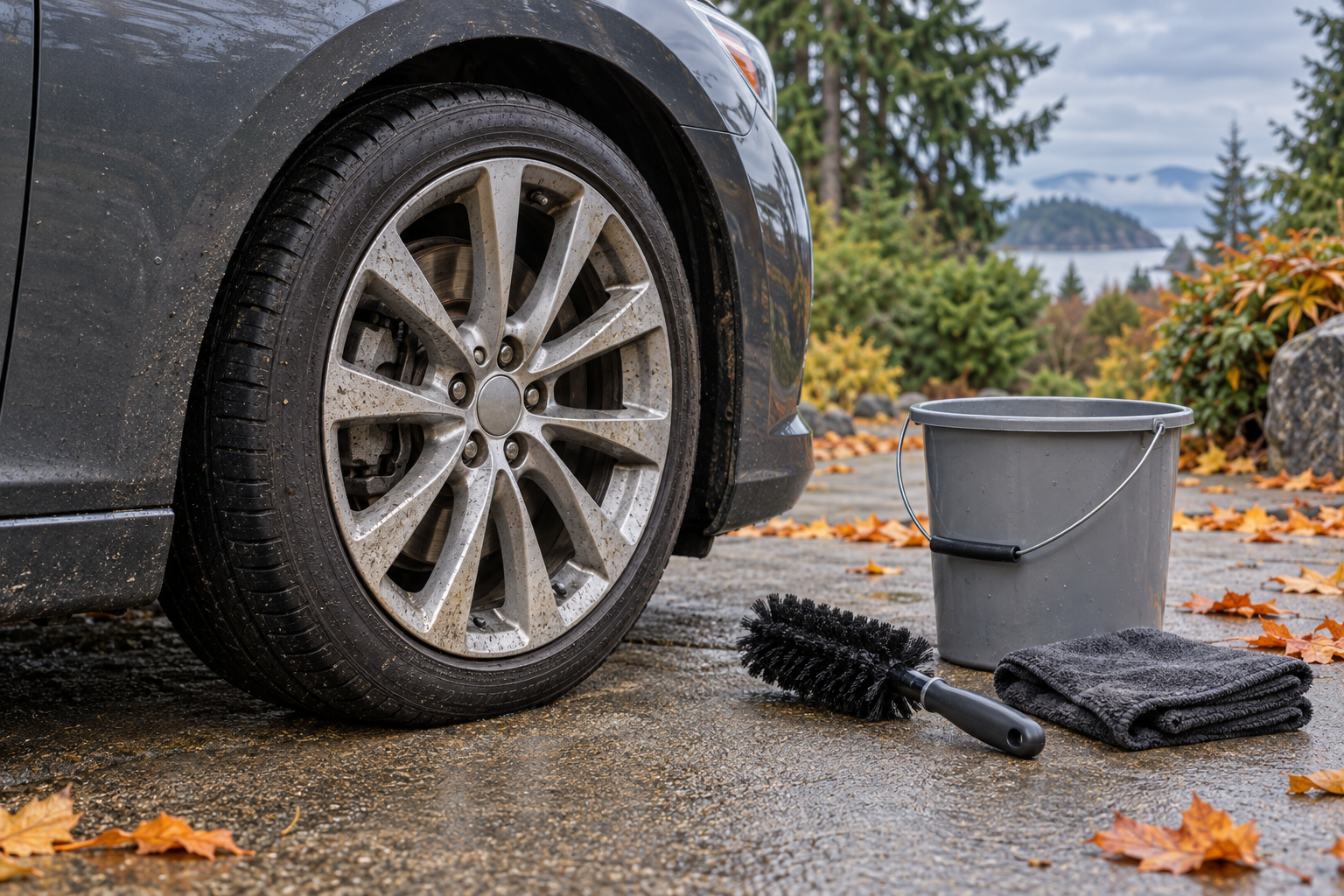
To clean alloy wheels in Nanaimo during autumn, start with cool wheels, identify their finish and use a cleaner approved for that finish. Rinse away loose dirt, clean gently with dedicated wheel tools and rinse thoroughly before the product dries. A stubborn dark mark is a reason to reassess the surface, not automatically a reason to use stronger chemicals.
November driving on Vancouver Island often means keeping up with wet-road grime as well as normal brake dust. This is seasonal advice, not a report of today's weather. The aim is a manageable wheel-care routine between full exterior details, with clear stopping points for unfamiliar or damaged finishes.
Check the finish before choosing a cleaner
“Alloy” describes the wheel material, but it does not tell you how the exposed surface is finished. Painted, clear-coated, polished, plated and refinished wheels can have different care requirements. A silver appearance alone is not enough to identify the finish. Check your vehicle handbook and any instructions supplied with aftermarket wheels or a recent refurbishment.
If you do not know the finish, ask the wheel supplier or repairer before trying a specialist cleaner. Tell them about any existing coating too. Keep the product label available: a general claim about wheel suitability is less useful than explicit compatibility with your particular surface.
As a manufacturer example, Ford's wheel-cleaning guidance calls for a recommended cleaner, warns against cleaning hot rims and notes that harsh acids, abrasive materials and unsuitable cleaners can damage wheels. Treat that as an example of why the handbook matters; follow the instructions for your own vehicle.
Prepare a small, separate wheel-cleaning kit
Keep wheel tools separate from the mitts and towels used on painted body panels. Choose a soft brush or sponge that fits the accessible wheel faces without forcing it between spokes. Inspect the tool for trapped grit, worn edges or exposed metal before starting. Set aside a wheel-only drying towel and keep all supplies within easy reach.
- Park securely in a suitable wash area with room to work.
- Let the wheels cool naturally after driving.
- Read the cleaner's dilution, dwell-time and rinse instructions.
- Check for flaking finish, deep chips or unusual marks before applying anything.
- Arrange the rinse water first so you can remove the product promptly.
A wet driveway is not necessarily a suitable place to wash. Choose a location where wash water can be managed appropriately. If booking a mobile appointment, discuss the working area and water arrangements in advance; our rainy-season mobile detailing guide explains other access and shelter questions.
A gentle routine for autumn road grime
1. Rinse away loose material
Start with a gentle rinse to carry away accessible grit and loose dirt. Avoid pushing debris around with a dry cloth. Do not aim a close, concentrated jet at damaged finishes, valves or trim. If using a pressure washer, follow both the equipment instructions and the vehicle's washing guidance for distance and suitability.
2. Clean one wheel at a time
Apply only a compatible product, exactly as its label directs. Work on one wheel so you can control the cleaning and rinse stage. Lightly agitate accessible faces and recesses with the suitable soft tool, rinsing the tool as it picks up dirt. Avoid reaching blindly around brake parts or trying to remove the wheel for an ordinary maintenance wash.
Do not let the cleaner dry on the surface. If the finish reacts unexpectedly, stop, rinse as directed and seek advice before repeating. Longer soaking and harder scrubbing are not reliable solutions to an unidentified mark.
3. Rinse, dry and inspect
Rinse thoroughly, including accessible recesses where cleaner could remain. Dry the wheel face with a clean wheel-only towel, then inspect it in good light. Compare the remaining mark with your initial observation: did loose grime lift, or does the surface itself look discoloured, chipped or rough?
Follow the vehicle handbook's post-wash instructions. The Ford example above advises a short drive before extended parking after wheel cleaning to reduce brake-component corrosion risk. Do not improvise brake procedures or treat wheel cleaning as a substitute for mechanical maintenance.
When brake dust or a dark mark will not lift
Pause before escalating. A photo taken on a clean, dry wheel can help a detailer or wheel specialist assess what needs closer inspection. Explain which product you used, the finish if known and whether the mark was present before cleaning. Avoid sanding, metal polish or improvised household chemical mixtures to chase a spot.
Cleaning cannot repair missing coating, peeling lacquer, curb damage or corrosion beneath a finish. If you find those problems, ask a wheel repairer about the appropriate next step. New vibration, braking changes or other driving symptoms belong with a qualified vehicle technician, regardless of how clean the wheels look.
Make the next clean easier to plan
Inspect the wheels as part of your normal wash rather than waiting until every recess is heavily soiled. There is no single interval that suits every driver: mileage, parking, wheel design and the car's care instructions all matter. Rain alone should not be treated as a wheel-cleaning method.
If the wheels already have a protective coating, use its aftercare guidance alongside the wheel manufacturer's directions. Do not assume every bodywork coating or maintenance product suits wheels. For the rest of the vehicle, our rainy-season ceramic-coating care article covers maintaining coated paint.
Frequently asked questions
Can I use the same brush on wheels and paint?
Keep a dedicated wheel tool and separate paint-washing equipment. This also makes it easier to inspect and clean each tool before the next use.
Does a wheel need stronger cleaner if it still looks stained?
Not necessarily. First identify the finish and the remaining mark. A damaged or discoloured surface may need assessment rather than another cleaning chemical.
Can Detail Boss include wheel cleaning in an exterior detail?
Yes. Detail Boss's Silver - Refresh Exterior and Gold Luxury Exterior Detail list rim and tire detailing. Describe aftermarket wheels, coatings or existing damage when arranging the work so the appropriate scope can be confirmed.
Book exterior detailing in Nanaimo
Explore Detail Boss mobile detailing in Nanaimo and request a quote with your vehicle details and clear photos of any stubborn wheel marks. You can also book online. Mention the wheel finish and any prior refurbishment so care requirements can be discussed before your appointment.