How to Remove Tar Spots from Car Paint in Nanaimo
By Detail Boss · November 22, 2026
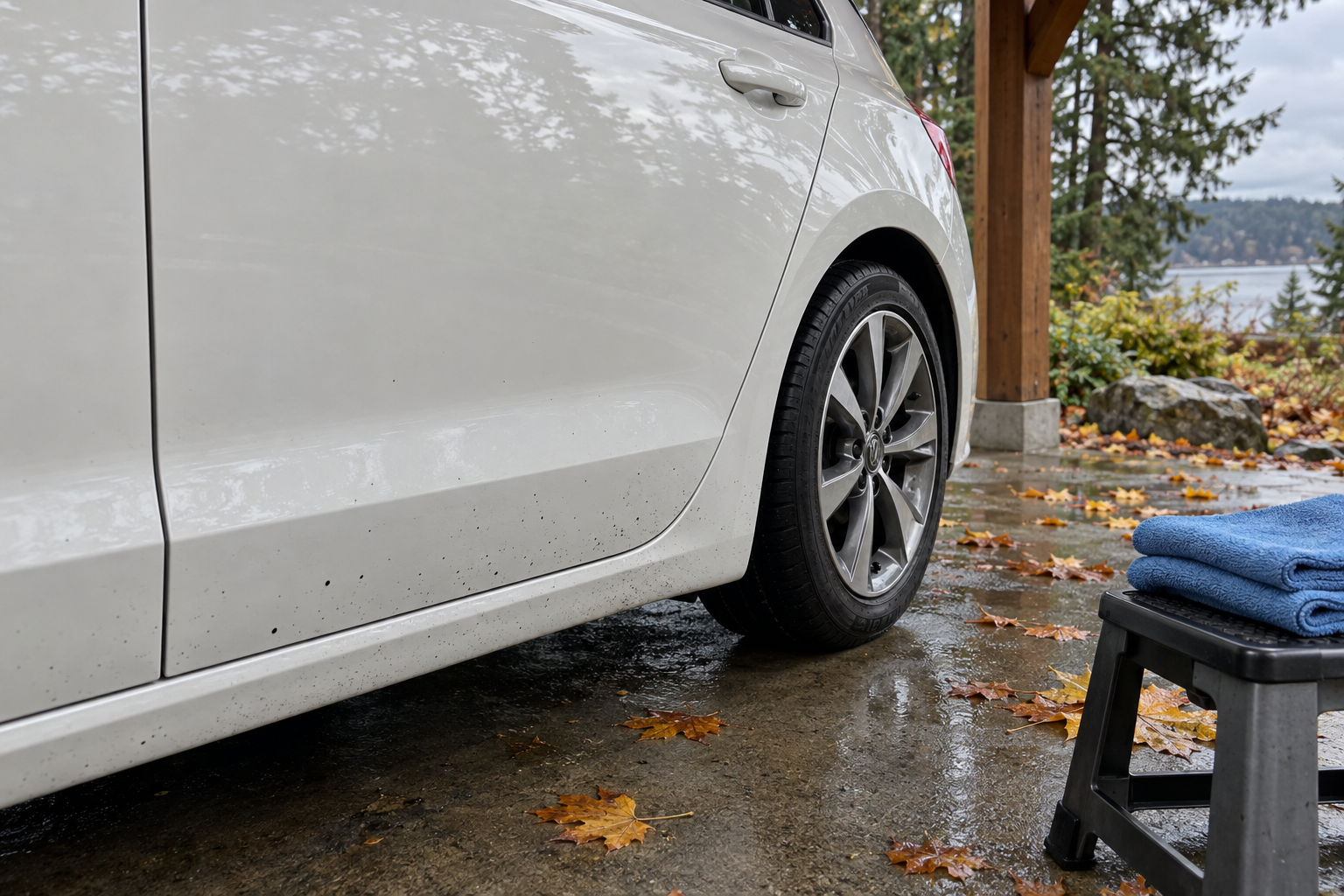
To remove tar spots from car paint in Nanaimo, first wash away loose dirt, then assess what remains. If the deposit is suitable for home treatment, use a dedicated automotive tar remover approved for the exact surface and follow its label. Avoid scraping or escalating to polish simply because a black speck survives a normal wash. Unknown finishes, paint-protection film and persistent marks deserve an assessment first.
During Vancouver Island’s late-autumn wash routine, give lower doors and painted areas behind the wheels a deliberate look. This is advice for typical wet-season car care, not a claim about today’s weather or local roadworks. The aim is to make a careful decision about stubborn spots while you already have the vehicle clean enough to inspect.
Check what you are actually looking at
A dark dot is a description, not a diagnosis. Before choosing a cleaner, note where the spots sit, whether they appeared after a particular journey and what the surrounding finish looks like. Do not pick at a spot with a fingernail to find out how firmly it is attached.
Take a few photographs after the ordinary wash: one showing the whole panel and one closer view. Tell your detailer about any repaint, touch-up, wrap, ceramic coating or protective film. If you do not know the finish history, say so. That information helps shape a useful assessment without pretending that a photograph alone proves the contaminant.
Keep other concerns separate. Pale rings after water dries belong in our water-spot cleaning and correction guide. Leaf-shaped outlines have a different starting point, covered in our wet-leaf removal guide. Neither is a reason to apply tar remover across the whole car.
Start with the vehicle’s normal wash instructions
Ford’s 2024 Territory manual recommends regular washing with neutral-pH car shampoo, warns against strong household detergents and hot or sunlit washing conditions, and advises prompt removal of contaminants including tar. Consult your own model’s instructions, especially where a specialist finish is fitted.
Set aside clean wash tools for the bodywork and keep dirty wheel tools out of that task. Choose a space where you can finish the work without rushing to move the vehicle. After the wash, inspect the remaining dots before adding another product. A useful stopping point is a clean panel with clearly identified remaining concerns—not a panel rubbed repeatedly until something changes.
Read surface exclusions before choosing a tar remover
The word “automotive” does not mean every part of a car is a suitable application surface. Read the exclusions as carefully as the directions. Look for instructions about paint condition, trim, repairs, coatings, wraps and film, and check the vehicle or film maker’s care guidance too.
For example, Gtechniq’s current W7 instructions describe use on Gtechniq-coated paint but exclude PPF, wrapped vehicles and smart repairs. They also warn against contact with plastics, decals, rubber and vinyl. The application guidance specifies working out of direct sunlight, applying with a microfibre cloth, a one-to-two-minute dwell and rinsing. These are instructions for that product, not a universal recipe or a statement that Detail Boss uses it on every vehicle.
Ask these questions before opening a bottle:
- Do I know the material and finish of the affected area?
- Does the current label explicitly permit that surface?
- Can I keep the product away from excluded neighbouring materials?
- Can I complete the required removal and rinsing steps here?
- Have I checked any existing protection’s care instructions?
If an answer is uncertain, leave spot treatment for a professional discussion. Do not assume a product suitable for painted metal is also appropriate for the black trim immediately beside it.
Keep any spot treatment small and controlled
When the finish and product are confirmed compatible, follow the label’s preparation and test-area instructions before treating visible spots. Plan one manageable area at a time. Have the specified cloths and rinsing arrangement ready before application, rather than hunting for them during the contact period.
Use only the stated amount, contact time and removal method. Do not combine products or replace a directed rinse with a quick dry wipe. Stop if the finish changes or the result is unexpected. A remaining dot is a reason to reassess; it is not permission to scrape, use a more aggressive household solvent or keep rubbing harder.
Solvent-based products also need sensible handling. W7’s safety data sheet, for instance, identifies flammability and calls for avoiding vapour exposure and using protective equipment. Read the safety information for the product actually in your hands, including ventilation, storage and waste instructions. Shelter from rain should not become an enclosed space full of fumes.
Does stubborn tar mean you need paint correction?
Ask for cleaning and assessment before deciding on polishing. A deposit sitting on the surface and a mark remaining after removal are different observations. Explain which stage you have reached and list the products already tried. This keeps the conversation focused on the remaining problem.
Detail Boss’s current menu includes exterior detailing with paint decontamination, plus polishing options. Discuss the scope of mobile detailing in Nanaimo for the contamination you can see. If a separate finish concern remains, our paint correction page explains the service to ask about. No particular level of correction or complete removal can be promised from a description of black spots.
Plan the autumn appointment around access and aftercare
Send the vehicle’s year, make and model, the affected panel photographs and the protection history when requesting a quote. Mention whether the spots are isolated or spread over several panels. Ask what preparation, suitable working space and follow-up care the proposed treatment needs.
For mobile work, describe parking access and available shelter before the appointment. Agree the arrangement with the team instead of assuming that a carport automatically suits every process. If the vehicle already has a coating, ask how its maintenance instructions affect the plan; our rainy-season coating-care guide covers the broader wash routine.
Frequently asked questions
Will a normal wash remove every tar spot?
Do not assume so. Wash first so you can assess what remains, then decide whether a compatible specialist treatment or professional inspection is appropriate.
Can I use the same remover on paint and plastic trim?
Only if that specific product’s directions and the surface-care instructions permit both. Some tar removers explicitly exclude plastic, rubber, decals and film. A nearby painted panel does not make those materials suitable.
Can a ceramic-coated car still need tar assessment?
Yes. Report the coating brand and installation history when known. Compatibility with one coating system does not establish compatibility with every coating, repair or adjacent material.
Get a quote for the spots that remain
Request a Detail Boss quote with clear photographs and a short account of what you have tried, or book detailing online. A measured autumn cleanup starts with identifying the surface and agreeing the right work.