Water Spots on Car Paint in Nanaimo: Cleaning or Correction?
By Detail Boss · November 10, 2026
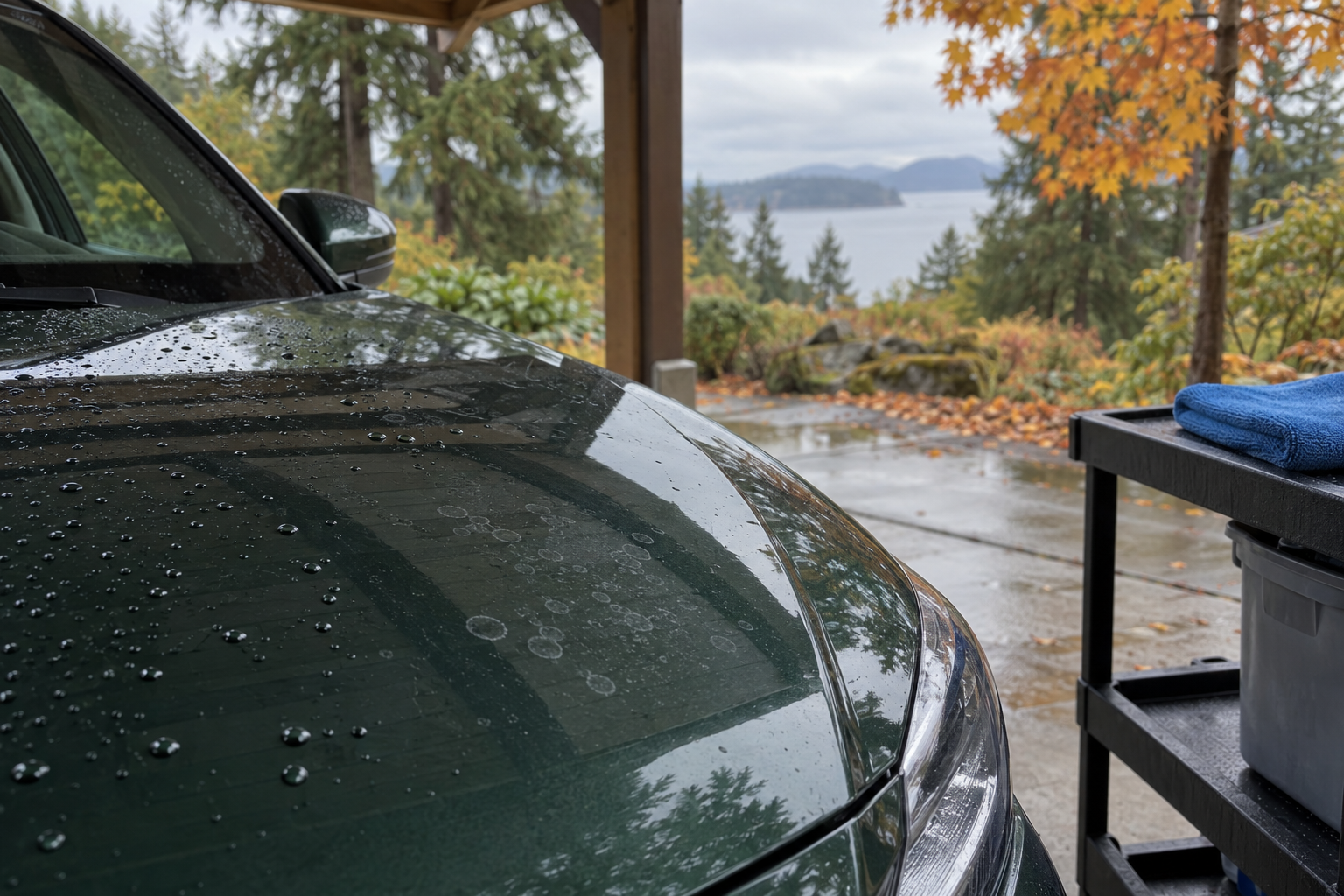
To deal with water spots on car paint in Nanaimo, start with a careful wash and dry, then inspect the clean finish. Some rings are deposits sitting on the surface; others may be marks etched into the finish. Use a dedicated remover only when it is compatible with your vehicle and protection system. If a mark remains, stop rubbing and arrange an assessment before polishing.
Autumn brings repeated wetting and drying between journeys and wash days on Vancouver Island. That makes it a useful season to review how you rinse, dry and inspect your paint. This guide covers typical seasonal care, not today's weather, and does not assume Nanaimo tap water has a particular mineral content.
What can a water spot actually be?
A pale ring after water dries can be a surface deposit. Wash water, overspray and other water sources can leave different residues, so the outline alone cannot tell you where it came from. Dirty paint can also carry road film that makes an ordinary rinse look less successful than expected.
Etching is a different concern: the remaining mark involves the finish rather than just material sitting on top. You cannot reliably distinguish every case from a photograph or by how strongly the mark catches the light. Washing first lets you inspect the actual problem without grinding loose contamination into the paint.
A leaf-shaped outline or bird deposit deserves its own approach. If the mark follows fallen debris, see our wet-leaf removal guide. Do not assume every pale patch on a November bonnet is a mineral stain.
Start with a wash, not a spot-removal experiment
Check the finish and care instructions
Identify whether you are working on ordinary glossy paint, a matte finish, vinyl wrap or paint protection film. Mention repaired panels and any existing ceramic coating when asking for advice. A remover approved for one surface is not automatically suitable for neighbouring trim, badges or another protective material.
The vehicle handbook matters as much as the cleaner label. For example, Tesla's Model Y cleaning guidance warns against acidic exterior products and washing in direct sunlight. A specialist product's broad compatibility claim does not override that vehicle-specific restriction.
Clean and dry before assessing the rings
Use the wash process approved for your vehicle, removing loose grit before contact washing. Work on cool panels in suitable shelter, rinse away shampoo and dry gently with clean, suitable drying tools. Keep wheel towels away from painted panels. If a cloth collects dirt, change it rather than continuing across the bonnet.
Inspect the dry surface under even light and from more than one angle. If the rings have gone, there is no reason to add a stronger chemical or polish. If they remain, note which panels are affected and whether the spots appeared after a recent wash, parking near overspray or an unknown event.
When a dedicated water-spot remover may help
A compatible remover may address surface deposits after ordinary washing has failed. Gtechniq's W9 product information describes removal of mineral and silica deposits, while acknowledging that deeply etched damage is beyond the product's purpose. This distinction matters more than how quickly an advertisement promises a clean panel.
If your handbook and protection provider permit the selected product, follow its current label, including the surface restrictions, protective equipment, working area, contact time and residue-removal process. Test a discreet section first. Keep the product off unapproved adjacent materials and do not let it dry while you work elsewhere.
A small test should answer whether that method helps. Do not keep increasing pressure, combine cleaners or improvise a household acid mixture to chase an unchanged ring. If the instructions conflict with your vehicle's guidance, ask the manufacturer or a professional before proceeding. Choosing assessment instead is a valid next step.
Water spots on ceramic-coated paint
Do not treat a ceramic coating as permission to leave every deposit indefinitely. Equally, a visible ring does not establish that the coating has failed. Clean the surface appropriately and discuss persistent spotting with the installer or coating provider before deciding what treatment it needs.
Provide the coating's name, approximate application date and aftercare instructions if you have them. A coating-safe claim for a remover is useful information, but it is not a universal approval for every coating, newly treated panel or neighbouring material. Fresh protection may have separate care restrictions.
Our rainy-season ceramic coating care guide covers routine maintenance. For an existing coating, ask about compatible cleaning before booking a new ceramic coating service in Nanaimo just because water behaviour looks different.
When to ask about paint correction
Ask for an inspection when rings remain after suitable cleaning, you cannot identify the finish, or you see haze, texture changes or damaged clear coat. Photograph clean, dry paint in useful light without filters. Explain what you have already tried, including the product and number of attempts.
Paint correction in Nanaimo is an assessment-led option for suitable paint, rather than the first response to every spot. Polishing is abrasive work, so agree on a test area, realistic improvement and acceptable remaining marks. A detailer should distinguish removable contamination from a defect before choosing the process.
Detail Boss's current catalogue includes exterior detailing and polishing services. Describe the spotting when enquiring so the scope can be discussed; do not assume water-spot treatment is included in a standard wash or that every mark can be removed.
A practical autumn wash-day checklist
- Choose a cool, sheltered work area with time to rinse and dry properly.
- Check the handbook and any coating or film aftercare before selecting products.
- Use clean tools and keep gritty wheel equipment separate from paint tools.
- Dry after washing instead of leaving wash water to evaporate.
- Inspect the dry finish before adding another treatment.
- Record persistent marks and stop if cleaning changes the surface unexpectedly.
You do not need to chase a parked car with a towel after every shower. Never wipe a dirty panel dry simply to remove droplets. Concentrate on a controlled wash-and-dry routine and prompt, suitable attention to identified contamination. For mobile work, describe your shelter and parking access when arranging the appointment.
Frequently asked questions
Will rain wash water spots away?
Do not rely on another shower to remove deposits or repair etching. Start with a proper wash and inspect the dry surface to decide whether anything more is needed.
Can I polish the rings out by hand?
A remaining ring is not enough to choose an abrasive. Identify the finish and try suitable cleaning first. Ask for assessment if it persists, particularly on coated, repaired or unfamiliar paint.
Does a ceramic coating prevent all water spots?
Do not book a coating expecting that guarantee. Discuss the product's limits, ongoing washing and specific aftercare with the provider. Existing spots should be assessed before new protection is applied.
Get help with persistent paint marks
Book Detail Boss online and describe your vehicle, existing protection and the panels that concern you. Ask which exterior service suits the condition, and mention any previous cleaning attempts so the next step starts with useful information.