Windscreen Wipers Smearing in Nanaimo? Autumn Care Guide
By Detail Boss · November 21, 2026
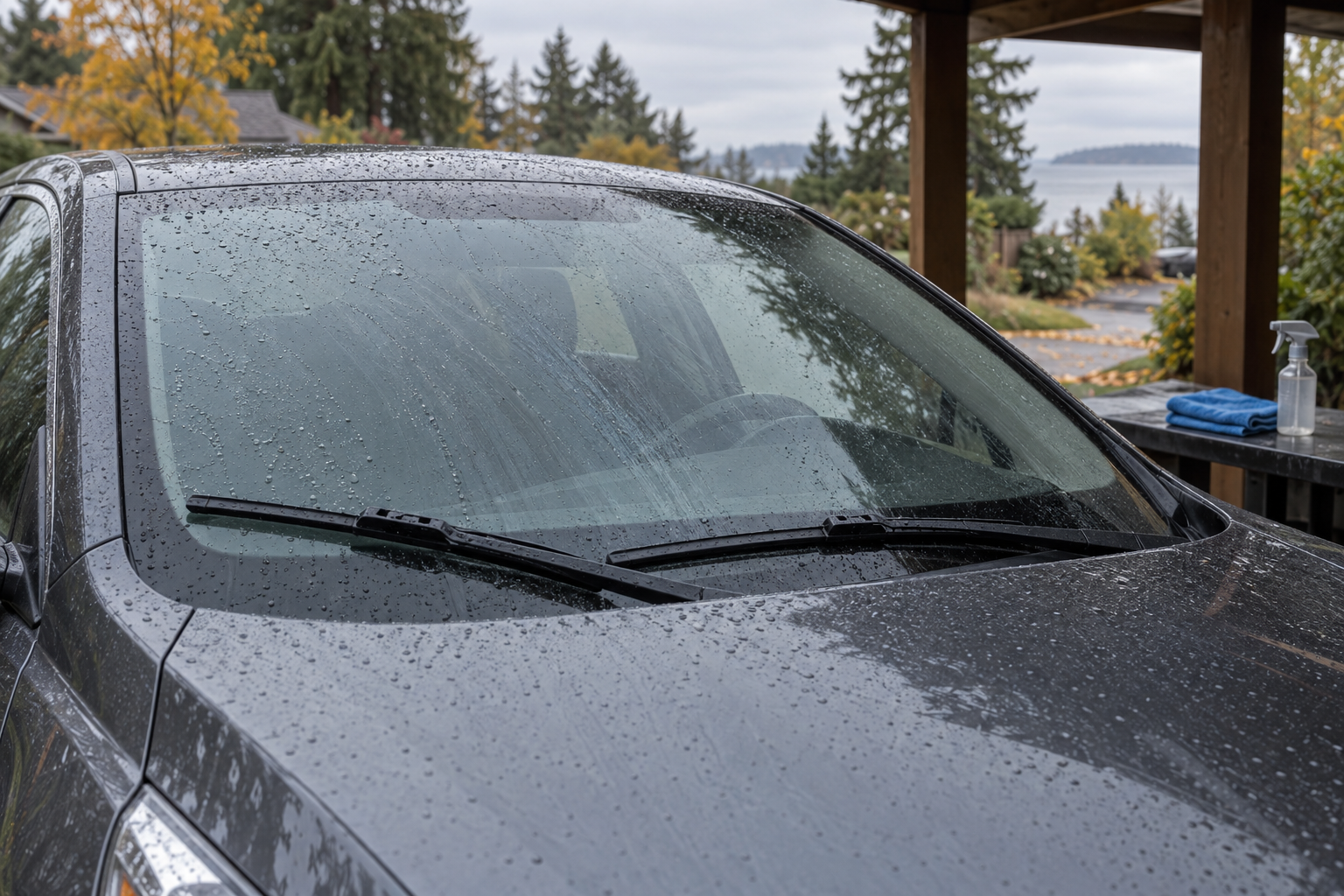
If your windscreen wipers smear in Nanaimo’s autumn rain, start by checking both the outside glass and the blades. Clean them using your vehicle manufacturer’s approved method, inspect the rubber and test the result while parked. Replace damaged or persistently ineffective blades, and have continuing problems assessed rather than repeatedly adding stronger cleaners.
Late autumn is a sensible time to organise this small piece of vehicle care before winter trips. This guide is about typical wet-season use on Vancouver Island, not a report of today’s weather. It focuses on exterior wiping; condensation inside the cabin needs a different approach.
Work out which side of the glass needs attention
While parked, look at the windscreen from inside and outside. Note whether the mark follows the wiper sweep, stays in one spot or appears across an area the blades never touch. Describe what you can actually see rather than deciding immediately that the blades are worn out.
Make a short checklist before buying anything:
- Is the problem on the outside surface, the inside surface or both?
- Does one blade leave a narrow line, or does a broad film remain?
- Did it start after a wash, a glass treatment or a fluid change?
- Have the blades recently been replaced, and is the correct fitment confirmed?
- Is the washer system delivering fluid normally?
If the problem is an interior haze or moisture, use our interior glass and foggy-window guide. Treating the outside repeatedly will not address a problem you have identified on the cabin side. If the glass is visibly damaged, arrange a glass assessment before pursuing cosmetic cleaning.
Clean the glass as well as the blades
Bosch explains that windscreen contamination can cause poor wiping even when the blades remain in good condition. Replacing the blades without checking the surface leaves an important part of the job unfinished.
Find the cleaning instructions for your exact vehicle and any aftermarket glass coating. Set out clean cloths, the permitted cleaner and enough time to finish. Keep the cloth used for glass separate from tools used on wheels or muddy lower panels. Do not improvise with an abrasive pad or polishing compound when ordinary cleaning leaves a mark.
Work on a manageable area and inspect it from the driver’s normal seated position once finished. Record what remains. A photograph taken while safely parked, plus the name of any recent glass treatment, is more useful for an assessment than a description such as “the windows never look clean.”
Use the correct blade-access procedure
Do not assume that wiper arms can simply be pulled upright from their parked position. Ford’s Mustang manual supplement warns that lifting them there can damage the hood and gives a specific repositioning sequence. That example is a reason to consult your own manual, not a procedure to copy across every car.
Once access is correctly arranged, use only the permitted method. The same Ford guidance describes cleaning with water or washer fluid on a soft cloth or sponge, then returning the arms to their normal position. Follow your model’s instructions throughout; stop if an arm does not move as described.
Inspect the rubber before another cleaning attempt
Tesla’s Model 3 manual calls for checking blade edges for splits, cracks and roughness, replacing damaged blades promptly, and replacing blades that remain ineffective after cleaning. It also identifies deposits on the glass or blades as possible contributors to poor wiping.
For a practical home check, keep the sequence short:
- Park securely and consult the blade-access instructions.
- Inspect the accessible rubber and note visible damage.
- If suitable, clean the glass and blades by the approved method.
- Return everything to its operating position as instructed.
- With hands and tools clear, test on wetted glass while parked.
- If wiping remains poor, arrange the appropriate replacement or assessment.
Do not make a journey your test. If you cannot obtain a clear view, address the problem before driving. Describe unusual movement, persistent noise or washer failure to a repair workshop; a detailing appointment should not be treated as a diagnosis of the mechanism.
Review washer fluid and glass treatments
Check the exact fluid requirements before topping up, particularly when planning travel beyond Nanaimo. Match the product’s temperature protection to the conditions expected along the entire route, and follow its label rather than guessing a dilution.
Compatibility matters too. Tesla’s cited manual warns against washer fluids containing bug wash or water repellent because they can cause wiping problems. That is model-specific guidance, not a claim that every vehicle has identical restrictions. Discuss existing treatments before adding another product or booking a coating.
Detail Boss’s service menu includes glass-cleaning work within detailing packages and glass-protection options. Ask which scope suits your vehicle and its care requirements. A coating cannot be promised as the cure for an unresolved wiping fault.
Prepare for a Nanaimo detailing appointment
When arranging mobile detailing in Nanaimo, mention the windscreen concern before the visit. Include your vehicle’s year, make and model, whether the issue began after another service, and what has already been applied. Agree whether the appointment covers interior glass, exterior cleaning or a broader refresh.
For autumn mobile work, describe the parking space and available shelter. Our rainy-day mobile detailing guide explains the practical arrangements to discuss. Keep mechanical or glass-repair concerns on a separate list so they reach the right provider.
Frequently asked questions
Should I replace smearing wipers immediately?
Visible rubber damage calls for replacement. If no damage is apparent, check the glass and follow the approved cleaning process first. Persistent poor wiping still needs attention before the next drive.
Can new blades smear?
Yes. As Bosch notes, contaminated glass can affect otherwise sound blades. Tell the installer if the problem began with a replacement so fitment and the remaining cause can be checked.
Will exterior detailing fix fog inside the car?
First identify which surface is affected. Explain an interior moisture or film concern when booking so the work can be scoped around what you observe.
Arrange an autumn glass-care refresh
Request a Detail Boss quote with the details of your glass-cleaning concern, or book detailing online. Combining clear observations with the right cleaning scope makes it easier to plan useful wet-season care.