How to Remove Bird Droppings from Car Paint in Nanaimo
By Detail Boss · November 3, 2026
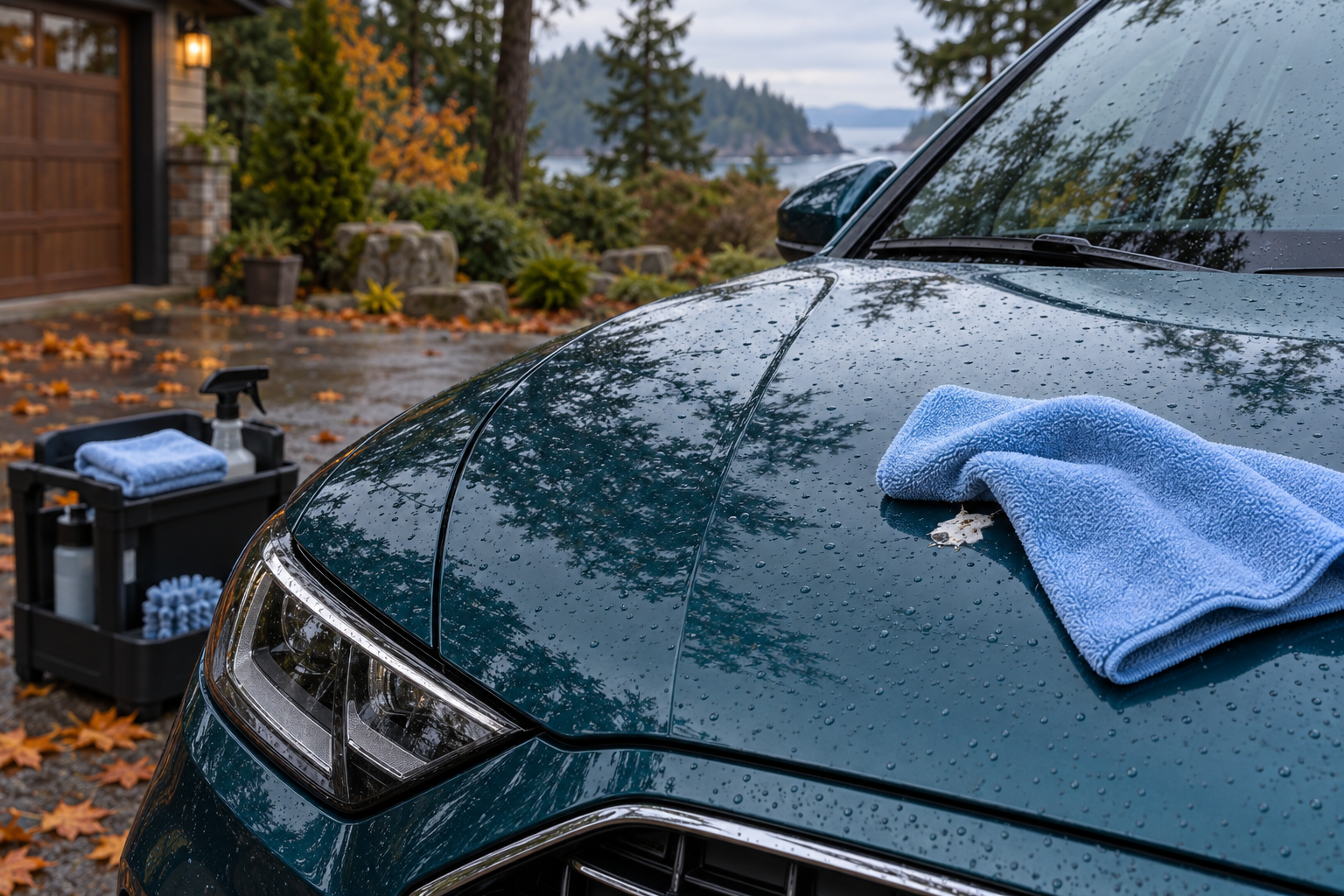
To remove bird droppings from car paint, soften the deposit first, lift it gently with a suitable wet cleaning medium, then wash and inspect the area. Do not scrape a dry patch or scrub harder when an outline remains. For Nanaimo drivers parking outdoors through autumn, checking the bonnet, roof and mirrors when you return to the car is a useful habit alongside clearing fallen leaves.
This guide is about typical autumn car-care planning on Vancouver Island, not a report of today's weather. Bird deposits deserve attention in every season: a damp-looking car is not evidence that rain has cleaned the paint. The aim is to remove contamination with as little rubbing as possible and recognise when a remaining mark needs assessment.
Why deal with a small deposit promptly?
Autoglym's guidance on bird-dropping damage recommends early removal, moist cleaning and softening dried deposits before lifting them. Its research describes how temperature changes and deposit texture can leave a dull impression in paint lacquer. The practical takeaway is straightforward: remove the material carefully when you notice it instead of waiting for the next full detail.
You cannot judge the eventual result from the size of the splatter. A small patch may lift cleanly, while a visible outline can remain after the material is gone. Treat cleaning and correcting a paint defect as separate decisions. Neither a fresh wash nor paint protection guarantees that every mark will disappear.
Before you start: check the surface and supplies
Park safely and work on cool bodywork in shade or shelter where possible. Follow your vehicle handbook and the instructions for any film, wrap, matte finish or coating. A product suitable for ordinary glossy paint is not automatically approved for every surface.
- Have clean water, a compatible automotive cleaner and several clean, soft cloths ready.
- Read the cleaner's dilution, contact-time and rinsing directions before opening it.
- Keep used cloths away from the clean towel supply and other panels.
- Use disposable gloves if appropriate and avoid touching your face during cleanup.
- If you cannot establish product compatibility, pause and ask for advice.
Do not borrow a wheel-cleaning cloth or gritty brush for the bonnet. If the whole panel is visibly dirty, plan a proper wash rather than dragging a towel across surrounding road film during a quick spot clean.
A gentle removal sequence
1. Wet and soften the deposit
Apply clean water or an appropriate product as its label directs. For a dried patch, let moisture soften it before attempting to lift it. Keep the area wet during that process; do not let cleaner dry on the panel. Product directions and the surface manufacturer's care instructions determine the method, rather than a fixed soak time for every vehicle.
2. Lift gently and use a fresh cloth face
Once softened, lift the material with minimal pressure. Avoid spreading it across a larger area. If it resists, add moisture and reassess instead of pushing harder. Switch to a clean cloth face or a fresh cloth as contamination is picked up. Never scrape with a fingernail, blade or plastic card.
3. Finish the wash as directed
Remove cleaner residue according to the label, wash the affected area with compatible car shampoo and rinse as required. Dry gently with a separate clean towel. Contamination in seams or around trim may need more careful access; forcing a cloth into a tight gap is not a substitute for inspection.
4. Check the clean, dry paint
Look in ordinary daylight from more than one angle. If the deposit has gone but a dull shape remains, stop repeating the removal process. Take a clear photograph to show a detailer. Do not assume the outline is still dirt simply because its shape matches the original splatter.
What if there is still a mark?
A remaining blemish needs an assessment of the finish and the defect. Explain how long the deposit may have been there, what products you used and whether the car has a coating, film or previous paint repairs. These details help define a sensible next step without promising a result from a photograph.
Paint correction may be worth discussing for suitable glossy paint, but aggressive polishing should not be the automatic response to one spot. Ask what improvement is realistic and whether the proposed work is appropriate for that panel. Avoid experimenting with abrasive household mixtures, heat guns or repeated hand-polishing in pursuit of an invisible repair.
Does ceramic coating change the approach?
Keep following the coating provider's maintenance instructions and remove contamination promptly. Do not treat beading as proof that a deposit is harmless, or use a stronger chemical simply because the car is coated. If the coating is newly installed, ask the installer how to handle contamination during its initial care period.
For ongoing maintenance, read our rainy-season ceramic coating care guide. If you are considering protection for your vehicle, our Nanaimo ceramic coating page explains the service separately from this spot-cleaning task.
A practical autumn parking routine
Check exposed panels before your next drive and keep a small compatible cleanup kit available. Choose a different parking space when a particular spot repeatedly leaves contamination on the car, where practical. Deal with leaves separately using our wet-leaf removal guide; sweeping everything away in one dry pass can drag debris across the finish.
After cleanup, isolate contaminated cloths and clean or dispose of them appropriately before reuse. Wash your hands thoroughly. A clean towel used for final drying should never be the same face of the cloth that lifted the deposit.
Frequently asked questions
Will autumn rain wash bird droppings off my car?
Do not rely on it. Inspect the panel and use a compatible cleaning process if contamination remains. A wet surface can still need attention.
Should I scrub a stubborn outline?
No. First establish whether any deposit remains. If clean, dry paint still has a visible shape, seek assessment rather than increasing pressure or trying more aggressive cleaners.
Can I use the same method on a wrap or matte paint?
Check that surface's care instructions first. Cleaning-product approval and polishing suitability differ; ordinary gloss-paint advice does not establish compatibility.
Ask Detail Boss about the remaining mark
For broader exterior care, explore mobile detailing in Nanaimo or request a quote with photos and your vehicle details. Describe any coating or film and what you have already tried. You can also book Detail Boss online; confirm the scope if a persistent paint blemish is your main concern.