Coffee Spilled on a Car Seat in Nanaimo? What to Do
By Detail Boss · November 28, 2026
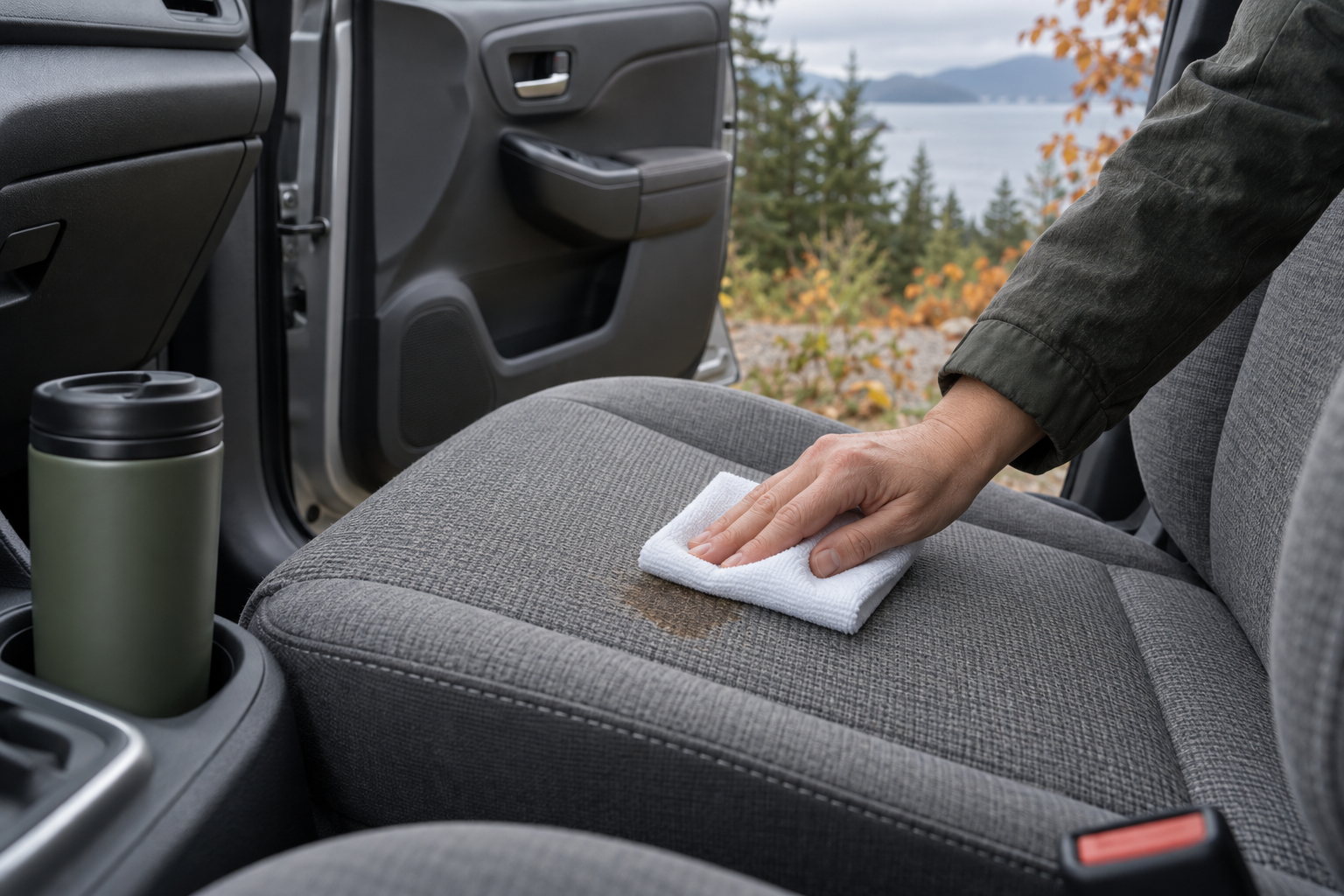
For a fresh coffee spill on a cloth car seat, park safely, blot up the liquid with clean absorbent cloths and check the vehicle's upholstery-care instructions before adding cleaner. Use only a compatible method, avoid soaking the cushion and plan enough time for drying. A large spill, liquid near seat controls or a stain that keeps returning deserves assessment rather than repeated scrubbing.
A hot drink is a familiar companion on a late-autumn trip around Nanaimo. Once a spill happens, however, the useful question is how to clean the seat without leaving a wetter problem behind. This guide focuses on coffee on fixed fabric upholstery and on planning cleanup during Vancouver Island's damp season; it does not describe today's weather.
Blot the spill before reaching for a bottle
Deal with the cup and loose liquid first. Move the drink to a secure holder, then press a clean white absorbent cloth against the wet area. Lift it, fold to a dry section and repeat gently. Work deliberately rather than rubbing the coffee across a larger section of the seat. Do not use a household vacuum to pick up liquid.
Check where the drink went: the cushion, the join between cushion and backrest, the buckle opening and the floor may all need attention. Do not pour rinse water into seams to chase a spill. If liquid has reached electrical controls or the seat is unusually soaked, stop wet cleaning and ask the vehicle manufacturer or a qualified repairer about inspection.
Identify the material and the limits of its care instructions
Cloth, microsuede, leather and mixed upholstery can require different treatment. Start with the manual for the actual vehicle, including any instructions for heated, ventilated or airbag-equipped seats. If you cannot identify the material, take photographs and ask before treating it.
For example, Ford's fabric-seat care guidance describes gentle cleaning with a damp cloth and mild soap solution, followed by a clean drying cloth. It warns against chemical solvents and strong detergents on seats with mounted airbags. This is a useful example of why a generic stain-removal recipe should never override the instructions for your car.
Keep the task separate from leather care. If the affected panel is leather, use the material-specific approach in our autumn leather-seat cleaning guide and the vehicle manual instead.
Choose one compatible cleaning method
Read both the upholstery instructions and the cleaner's label. A bottle marketed for fabric is not automatically suitable for every car seat. Test an inconspicuous area as directed and allow the test to dry before judging colour or texture changes. Stop if dye transfers, the finish changes or the material reacts unexpectedly.
Dr. Beckmann's upholstery-cleaner instructions, for instance, identify coffee and car seats among the product's uses, while requiring compatibility testing and compliance with the material manufacturer's directions. Its application instructions call for light treatment without soaking and removal of residue with a damp cloth. That illustrates the importance of a complete method, not just finding the word “coffee” on a label.
Use the precise dilution, contact time and residue-removal directions for the product you have. Do not borrow one product's dwell time for another, mix cleaners or move through several home remedies in a single attempt. Keep a note of everything applied, particularly if you may book professional help.
Clean gently, then reassess the whole affected panel
- Lift loose dry debris: once the immediate liquid is blotted up, remove any dry crumbs without grinding them into the damp fabric. Vacuum dry areas using a suitable soft attachment.
- Apply the approved treatment sparingly: use the method specified for the upholstery and cleaner. Work gently and keep added moisture controlled.
- Remove residue: use clean cloth sections and the label's finishing method rather than leaving a heavy cleaner deposit on the seat.
- Pause to assess: if the stain is not improving, seek advice before another application. More pressure and more liquid are not a useful default.
For a second manufacturer example, Autoglym's interior-cleaner directions specify colour-fastness testing and a light application for fabric. Its product-specific directions should be read in full before use. Detail Boss does not suggest that every example product suits every vehicle or that these are the products used at your appointment.
A ring around the treated area needs a fresh look at the panel, not endless rubbing along the outline. Ford's guidance addresses rings by extending cleaning to the whole area while avoiding oversaturation. If you cannot do that within your seat's care instructions or drying arrangements, let a detailer assess the next step.
Make drying part of the autumn cleanup
Before starting anything beyond blotting, consider when you need the seat again and where the vehicle can stay while it dries. Use a sheltered, secure location where ventilation will not admit more rain. Keep damp coats, bags and towels off the cleaned seat. Do not cover the cushion with a waterproof layer and assume the problem is finished.
Avoid promising yourself a fixed drying time. The amount spilled, the cleaning method and the conditions all matter. Ask the person doing the work how to check readiness for use and what to do if dampness persists. Do not improvise with a heat gun or leave the vehicle running unattended to speed the process.
When to book interior detailing in Nanaimo
Share whether the coffee was black or contained milk, cream or sugar, when it spilled and what you have already tried. Photograph the stain and describe any remaining smell or dampness. A clean-looking surface alone is not a reason to ignore liquid that may have gone deeper.
Detail Boss offers interior detailing, seat shampoo and carpet-cleaning services. Ask which scope fits the spill rather than assuming a light interior clean includes stain treatment. For mobile detailing in Nanaimo, discuss access, shelter and drying before the appointment. Our rainy-season mobile detailing guide covers those arrangements.
Frequently asked questions
Can an old coffee stain be removed from a car seat?
It may respond to suitable treatment, but removal cannot be promised without assessing the upholstery, stain and previous cleaning attempts. Tell the detailer how long it has been there and avoid hiding the history with another product.
Should I shampoo the entire seat after every small spill?
Not automatically. Start with the vehicle's approved care and the extent of the spill. A small surface mark and a soaked cushion need different decisions; discuss broader cleaning if a ring remains or liquid has spread.
Can I use the seat heater to dry the cushion?
Do not assume the heater is an approved drying tool. Follow the vehicle's instructions and ask about inspection if liquid reached electrical components. Arrange an appropriate drying plan before using the seat again.
Get the right help for the spill
Book Detail Boss online and describe the coffee spill, seat material and any products used. Confirm stain-treatment scope and drying arrangements so the appointment fits your vehicle and your next journey.