How to Clean a Muddy Car Boot and Cargo Area in Nanaimo
By Detail Boss · November 6, 2026
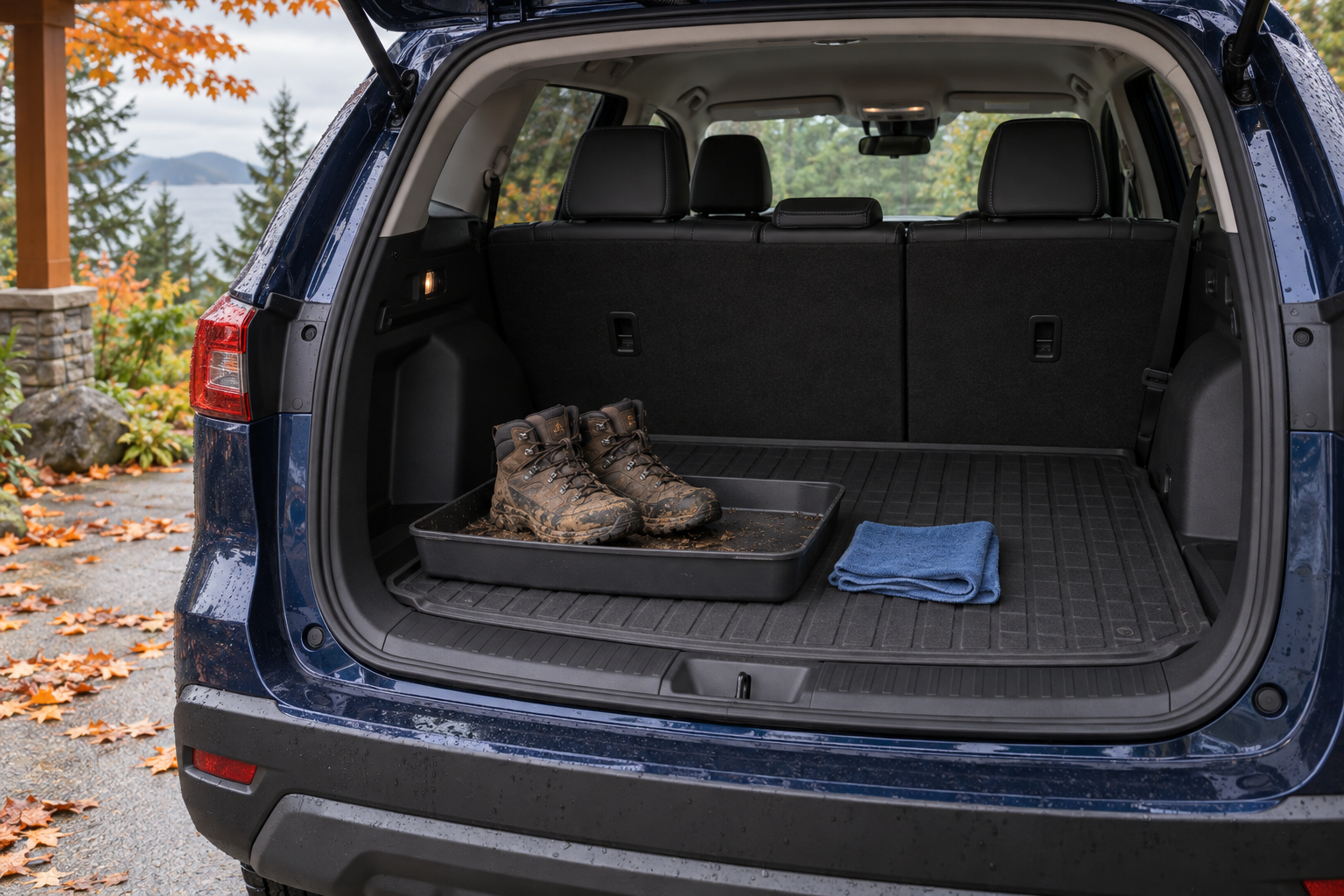
To clean a muddy car boot or SUV cargo area, unload wet gear, remove the liner if its instructions allow, collect loose debris and clean each material separately. Use as little moisture as the carpet-cleaning task needs, and let the liner and underlying area dry before putting everything back. If water keeps returning beneath the load floor, investigate the source rather than repeatedly shampooing the same patch.
For Nanaimo drivers carrying walking boots, sports bags and outdoor equipment through autumn, the useful habit is a quick unload-and-check after each outing. This guide addresses typical wet-season use on Vancouver Island, not today's weather. It focuses on the luggage compartment; our separate rubber floor-mat guide covers the footwells.
Start by emptying the cargo area
Move bags, reusable shopping totes, boots and damp towels somewhere they can be cleaned or dried. Check their undersides before placing them on a seat. Photograph an unfamiliar stain before cleaning so you can explain what was there if you later ask for help.
Remove only covers and panels your vehicle handbook identifies as owner-accessible. A removable liner is different from fitted carpet or trim secured around wiring. Do not pull at fixed panels, disconnect equipment or hose the luggage compartment. Keep cleaners away from electrical connections, power sockets and any vehicle components beneath the floor.
- Lift out loose leaves, gravel and larger pieces by hand without dragging them across trim.
- Check the liner's underside and the carpet below it for moisture.
- Look at accessible corners and the edge of the load floor, using a light if needed.
- Keep vehicle tools, charging equipment and emergency supplies dry and together.
Separate liner cleaning from carpet cleaning
Removable moulded liners
Read the liner manufacturer's directions before choosing a chemical or brush. As one product-specific example, WeatherTech's cargo-liner care guidance allows its designated cleaner or mild detergent and advises against harsh chemicals and silicone-based protectants. That guidance applies to its product; it does not establish compatibility for every liner.
Clean an approved removable liner outside the vehicle, in a suitable area. Remove loose grit first, work with the recommended cleaner and a compatible soft tool, and rinse or wipe as directed. Clean raised edges and recesses without aggressively scouring the surface. Dry both sides and inspect the underside before refitting. A clean top surface can hide water underneath.
Carpet and upholstered load floors
First remove loose material using a suitable vacuum attachment. Do not use a dry-only vacuum to pick up water or wet mud. If the carpet is soaked or the correct equipment is unavailable, stop and arrange an assessment. For ordinary loose dry soil, use gentle passes and avoid snagging carpet fibres with a damaged nozzle.
For a small mark, check the vehicle's material-care instructions and test a compatible upholstery cleaner in an inconspicuous place. Follow its dilution and removal directions. Work on a limited area with controlled moisture instead of pouring cleaner into the carpet. Blot with clean cloths as appropriate, changing cloth faces as soil transfers. Avoid vigorous scrubbing that distorts the pile.
Plan drying before starting a wet clean
Choose a time when the car can remain safely parked and the cargo area can dry with appropriate ventilation under shelter. Do not promise yourself that a closed boot will be dry by morning. The amount of water used, carpet construction and available drying conditions all affect the result; there is no reliable universal drying time.
Keep wet bags and freshly washed liners out while the area dries. Check accessible carpet edges and the underside of removable pieces, rather than judging only the exposed centre. Do not replace a liner over damp carpet simply to make the vehicle look tidy. Avoid using a heat gun or leaving an improvised heater unattended inside the vehicle.
If your schedule allows no drying window, remove wet gear and loose debris now, then book the deeper clean for a more suitable time. Our guide to planning a mobile detailing appointment in rain explains shelter and access questions to discuss beforehand.
What if dampness or a musty smell comes back?
A smell alone does not identify its source. Recheck forgotten towels, shopping bags and the underside of the liner. If accessible carpet becomes wet again after gear has been removed and the area has dried, arrange a vehicle inspection for a possible water-entry problem. Tell the repairer where you first noticed moisture and whether it followed carrying wet equipment, washing or rain.
Detailing can address appropriate cleaning tasks, but it does not repair a leaking seal or diagnose concealed water damage. Do not repeatedly add shampoo or fragrance to cover a recurring problem. If you find visible growth, extensive soaking, damaged trim or water near electrical equipment, ask for an assessment before disturbing panels or continuing routine cleaning.
Keep the next autumn outing easier to clean up
A removable tray for muddy boots can make unloading simpler, provided it fits securely and does not interfere with seats, latches or cargo anchors. Empty collected water and clean the tray after use. A towel can be a temporary way to catch drips, but take it out promptly rather than leaving it under bags for several days.
Containment is not cargo restraint. Ford's luggage-cover guidance reminds owners to secure loads. Use your own vehicle handbook for loading limits, anchor points and suitable restraint methods. Do not assume a textured liner or luggage cover will hold loose equipment during a sudden stop.
Frequently asked questions
Can I pressure-wash my car's boot?
Do not wash the fitted luggage compartment as if it were an outdoor tray. Remove only an approved removable liner for separate cleaning and follow its instructions. Keep water away from vehicle electrics and fixed trim.
Is a rubber cargo liner enough to prevent damp carpet?
It can contain some dirt and drips, but inspect underneath it. Moisture may be carried in around the edges or have another source. Remove wet gear and let both surfaces dry before refitting.
Can Detail Boss clean the luggage compartment during an interior detail?
Describe the cargo area when requesting the service and confirm its inclusion, material and condition. Mention wet carpet or persistent odour before the appointment so the scope and any need for repair assessment can be discussed.
Arrange interior detailing in Nanaimo
Explore Detail Boss interior and mobile detailing in Nanaimo, then request a quote with your vehicle details and photos of the cargo area. Explain whether you need loose-soil removal, carpet cleaning or help assessing a persistent mark. You can also book Detail Boss online. Confirm cargo-area work and drying arrangements before choosing your appointment.