How to Clean Chocolate from Car Seats in Nanaimo
By Detail Boss · October 30, 2026
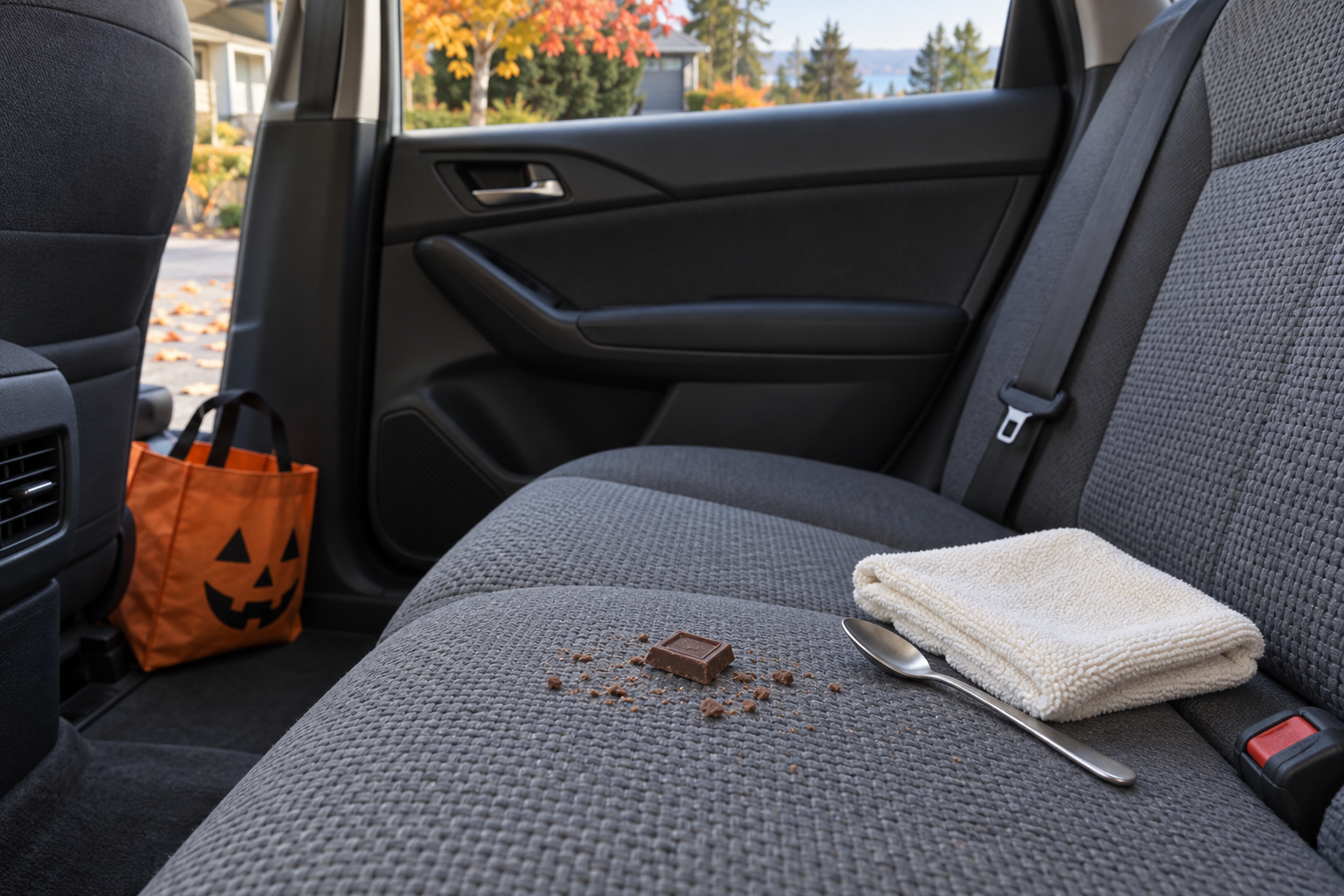
To clean chocolate from car seats, first lift away accessible solid pieces without rubbing them into the upholstery. Then check your vehicle handbook and use a cleaner approved for that seat material, testing it in a hidden area before treating the visible mark. Avoid soaking the seat or experimenting with strong household chemicals. A remaining stain may need professional assessment rather than more scrubbing.
With Halloween approaching, chocolate crumbs, sticky wrappers and treats dropped between seats are a timely interior-care concern for Nanaimo families. This guide focuses on chocolate cleanup after an autumn outing. It describes typical seasonal planning, including sheltered drying, rather than today's weather or a guaranteed stain-removal result.
Check what the chocolate has landed on
Grey fabric, coated leather, synthetic upholstery and suede-like trim require different care. Identify the material using your owner's manual, not appearance alone. Also look at where the spill sits: a flat fabric cushion is different from perforations, stitching, a seat-belt buckle or an electrical control. Avoid pushing food or liquid into those openings.
Before choosing a cleaner, note whether you have dry crumbs, a softened piece of chocolate or a drink spill. Loose solids can be removed before adding moisture; a soaked-in hot chocolate spill needs a different assessment. Do not remove factory upholstery or disconnect a seat to reach a mess. If access requires dismantling, ask an appropriate professional.
Remove solid chocolate before cleaning the stain
Lift pieces instead of spreading them
Park safely and work with the vehicle stationary. Lift accessible solid chocolate with the rounded edge of a clean spoon, using very light pressure and moving the material onto a towel. Do not dig into the fabric or use a sharp blade. If chocolate is soft and smears when touched, stop trying to scrape it across the cushion.
Vacuum loose, dry crumbs with a clean upholstery attachment, keeping hard edges from catching the fabric. Check accessible seams with good lighting. Do not vacuum liquid or sticky melted chocolate with equipment intended only for dry debris.
BISSELL's chocolate-cleaning guide distinguishes solid crumbs from liquid spills and recommends removing hardened material before wet cleaning. It also cautions against rubbing. Its household upholstery and machine instructions are not blanket approval to use those methods on every automotive seat; your vehicle's material restrictions come first.
Spot-clean cloth seats cautiously
Read the instructions and test first
Select an automotive upholstery cleaner that explicitly suits your seat fabric. Follow both the vehicle handbook and the cleaner's directions for dilution, application and removal. Test in an inconspicuous spot and let it dry so you can check for colour change or texture damage before proceeding.
Ford's vehicle-cleaning guidance recommends a dedicated cloth cleaner for cloth seats. That is a useful reason to choose a material-specific product instead of borrowing glass cleaner or a kitchen degreaser. A product suitable for one cabin surface may be unsuitable for the seat beside it.
Work with controlled moisture
Use the amount of product and application method stated on the label. Keep the treatment controlled rather than repeatedly flooding the same patch. When the instructions call for blotting, press and lift with a clean cloth instead of rubbing back and forth. Turn the cloth to a clean section as residue transfers.
Remove cleaner residue using the product's specified method. Pouring water through an installed seat is not the same as rinsing a removable garment. If a brown mark or ring remains, let the area dry and reassess. Repeatedly adding cleaner can leave more residue and moisture without improving the result.
What changes with leather or perforated seats?
Use the care method approved for your upholstery. Gently lift loose food first, then use a compatible leather or synthetic-seat cleaner as directed. Do not assume a fabric stain remover also suits leather. Ford advises light pressure when cleaning leather because hard rubbing can remove dye.
Take particular care around holes, stitching and seat edges. Do not spray cleaner into perforations, belt mechanisms, switches or seat-mounted electrical parts. Chocolate lodged inside these areas calls for a careful assessment, especially if an ordinary surface wipe cannot reach it. Conditioner or a dressing does not substitute for removing the food residue.
Plan drying around autumn use
A seat that looks clean may still be damp. Avoid covering it with a blanket or immediately refitting accessories over a wet area. Follow the cleaning product's instructions and arrange secure, weather-protected ventilation and drying before passengers use the seat again. There is no single drying time for every fabric, treatment and location.
If you are considering seat shampoo or extraction, tell the detailer when you next need the vehicle and whether you have shelter. Our rainy-season mobile detailing guide explains the workspace questions to discuss. Do not leave a vehicle running in a garage to dry the cabin.
When should you request interior detailing?
Ask for help when chocolate covers a large area, a drink has soaked in, the material is unfamiliar, or a stain persists after one appropriate cleaning attempt. Explain any previous cleaners you used and provide clear photographs. No photograph alone can establish whether every trace will come out.
Detail Boss offers mobile detailing in Nanaimo, including light, refresh and more involved interior packages. The catalogue also includes seat shampoo options. Describe the spill and overall condition so the scope can be matched to your vehicle. A full interior service is not automatically necessary for a small crumb spill, and a basic vacuum should not be mistaken for stain extraction.
A quick post-outing cabin check
- Collect wrappers and take treat bags indoors before chocolate is pressed into a seat.
- Check visible cushion seams and accessible footwells for dry crumbs.
- Remove wet coats and umbrellas so they are not left resting on upholstery.
- Keep any cleaning products secured and out of children's reach.
- Clean muddy removable mats separately; our rubber floor-mat guide covers drying and safe refitting.
Frequently asked questions
Can I use hot water to dissolve the chocolate?
Do not start by pouring hot water onto the seat. It adds moisture and can spread the mess. Follow the approved cleaner and vehicle instructions; if those are unclear, remove loose solids and seek advice before wet cleaning.
Will seat shampoo remove every chocolate stain?
No complete-removal promise is appropriate without assessment. Material, previous treatments, how far the spill penetrated and the condition of the upholstery all affect the result. Ask what improvement is realistic before agreeing to a service.
Should I use the same method on a child's car seat?
No. Follow that restraint manufacturer's instructions for its cover, harness and buckle. Vehicle upholstery guidance does not establish a safe cleaning method for a child restraint. Do not apply stain removers to harness webbing based on advice for cloth car seats.
Can I book cleaning before the next school run?
Explain your timing when requesting a quote. The appropriate cleaning method and drying arrangements need to fit the available time; do not assume a shampooed seat will be ready immediately.
Get a suitable cleanup plan
Request a quote from Detail Boss with your vehicle details, seat material if known, spill photographs and the products already tried. We can discuss an interior-cleaning scope and practical autumn drying arrangements without guessing at the condition from the word “chocolate” alone.