How to Clean Car Door Jambs and Rubber Seals in Nanaimo
By Detail Boss · November 9, 2026
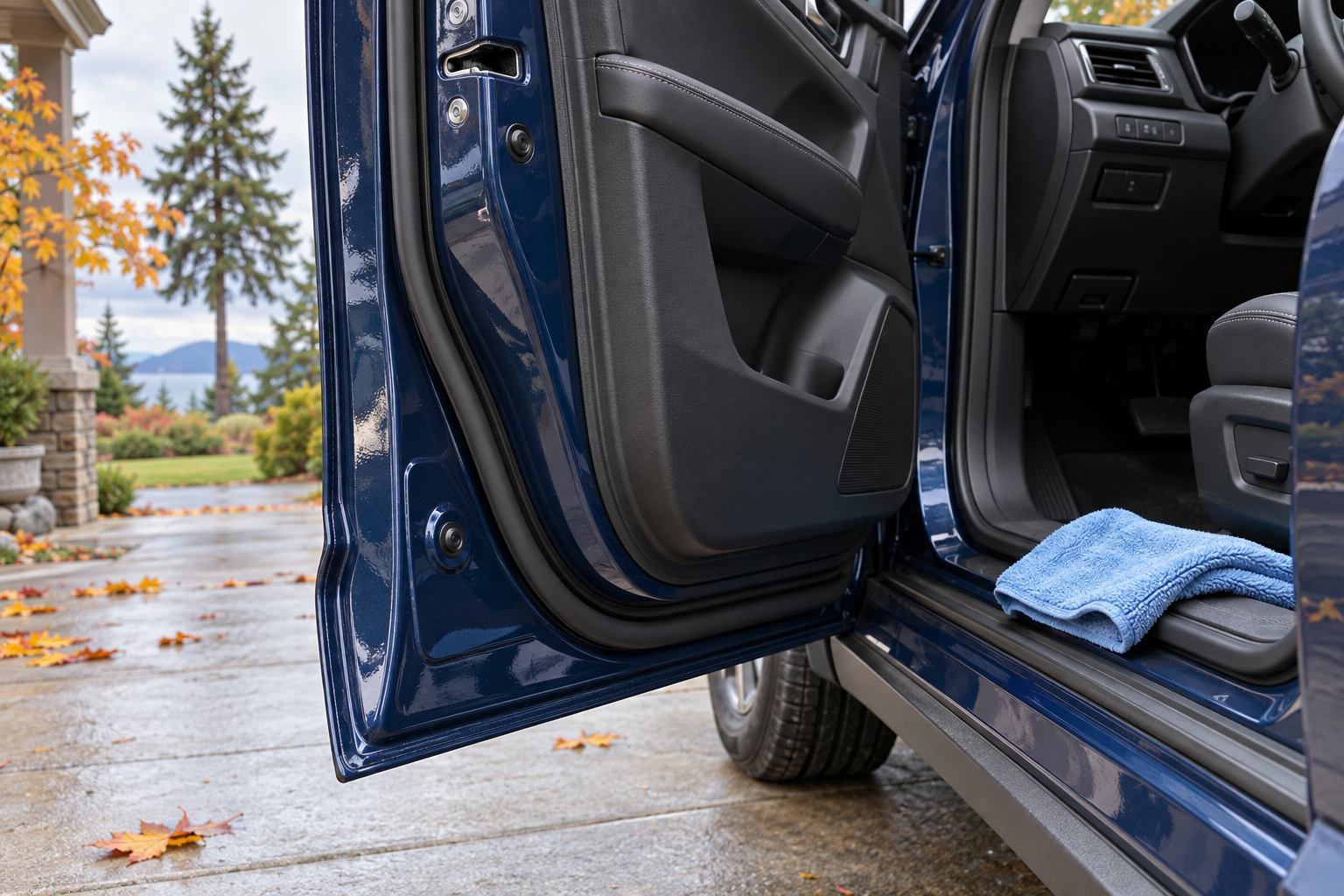
To clean car door jambs and rubber seals in Nanaimo this autumn, lift loose debris carefully, clean accessible painted surfaces with a finish-compatible method, and wipe weather seals gently with a damp soft cloth where your vehicle handbook permits it. Dry the area before closing up. Keep water and cleaners away from electrical connections and latch mechanisms, and treat recurring water inside the cabin as a repair question.
November is a useful time to look at the edges you miss during an ordinary wash. Leaf fragments collect near openings, muddy footwear brushes the sills, and wet coats pass through the doors. This guide addresses typical autumn conditions on Vancouver Island; it does not describe today's weather.
Know which surface you are cleaning
The door jamb is the painted opening around the door. The sill is the lower threshold you step across. Rubber weather seals run around parts of the opening, while nearby trim, hinges, wiring sleeves and latches each have different jobs. A cleaner suitable for painted metal may be unsuitable for a coated seal or textured plastic.
Before starting, check the cleaning section of your own vehicle's handbook. Note any special paint, wrap, repaired area or protective film. Look for loose seals, split rubber, lifting trim and exposed damage. Cleaning should make the area easier to inspect; it should not involve pulling weatherstripping off to discover what is behind it.
Prepare separate cloths and a sheltered workspace
Park securely with enough room to open the door without hitting a wall or another vehicle. Choose a sheltered, well-lit spot and avoid working while rain is blowing into the cabin. Switch the vehicle off as its handbook directs and keep keys somewhere that will not be locked inside.
- Use clean soft cloths for paint and a separate cloth for rubber.
- Keep another towel ready to catch incidental drips at the threshold.
- Set out clean water and only the products approved for the materials.
- Keep wheel brushes, gritty wash mitts and heavily soiled towels away.
- Remove loose belongings from the footwell before opening cleaning products.
For a mobile appointment, explain the available shelter and access in advance. Our rainy-season mobile detailing guide covers those arrangements in more detail.
Clean accessible door jambs in small sections
Lift debris before wiping painted edges
Pick up accessible loose leaves without sweeping them across the finish. If gritty material is stuck to the paint, soften and lift it using the handbook-approved wash method before wiping. Turn the cloth frequently and change it when dirty. Avoid pressing a contaminated towel into narrow folds to reach every last mark.
Work from the cleaner upper area toward the dirty lower sill. Keep a towel between your working area and the carpet where helpful, without catching it in a hinge or latch. Do not use a pressure washer inside an open doorway. Controlled cleaning gives you a better chance of keeping the cabin dry.
Use a method suitable for the finish
For ordinary grime on accessible painted metal, use a compatible automotive wash product as directed by its label and the vehicle handbook. Test unfamiliar products discreetly first. Remove permitted cleaning residue and dry gently with a fresh soft cloth. Do not let a cleaner dry in a seam while you move to the next door.
Leave factory grease on hinges and latches alone. Degreasing hardware can remove material that belongs there, and applying an unknown lubricant afterward is not a substitute for the manufacturer's maintenance procedure. Avoid spraying into wiring boots, switches, connectors and trim openings.
Wipe rubber seals without chasing a glossy finish
A damp soft cloth is a sensible starting point when the handbook allows it. Wipe accessible rubber gently, turning to a clean section as dirt transfers. Avoid stretching the seal or working an edge loose. Follow with a soft dry cloth where appropriate, then let remaining surface moisture clear before closing the door.
Tesla's Model Y cleaning instructions specify a damp cloth for door seals and caution against alcohol wipes or chemicals that could deteriorate their coating. The same manual warns against directing a hose at seals and electrical components. These are useful examples of why a general-purpose spray should not automatically be used throughout the doorway.
Skip optional dressing unless your vehicle manufacturer allows the particular product. Appearance alone cannot tell you whether a seal needs treatment. A shiny coating will not repair a torn section, restore a displaced edge or establish that the door is watertight.
Inspect drainage and moisture without dismantling
Look at accessible lower door edges for visible debris, following the handbook's maintenance guidance. Ford's exterior-care guidance calls for keeping body and door drain openings clear of debris. That does not mean pushing wire into an unidentified hole or removing plugs and trim.
If dirt is packed into an opening you cannot safely identify or reach, ask a repair professional. Photograph its location instead of probing it. Similarly, water found on a cleaned sill is not enough to diagnose a leaking seal. Note when it appears and whether the carpet, trim or door pocket is also wet.
Recurring wet carpet, damaged seals or persistent water entry need diagnosis. Detailing can clean accessible surfaces, but it cannot establish the source of a leak. For the separate task of managing cabin glass and damp belongings, see our autumn interior-glass guide.
Frequently asked questions
Can I use tyre dressing on door seals?
Only use a treatment specifically permitted for your vehicle's seals. A product's suitability for tyres does not establish compatibility with coated weatherstripping. Start with the handbook's cleaning method instead.
Will cleaning the seals stop a leak?
Do not assume it will. Remove accessible debris gently, but have recurring water entry assessed. Split rubber, alignment concerns and other faults require a different response from ordinary surface dirt.
Are door jambs included in a detailing booking?
Confirm the scope when booking mobile detailing in Nanaimo. Mention heavy sill grime, fragile trim and any moisture concern so Detail Boss can discuss suitable cleaning. Do not assume seal treatment or mechanical work is included.
Plan your autumn detail
Keep the next cleanup simple: check accessible edges during regular washes, remove loose leaf fragments and dry the threshold after cleaning. For help with accumulated grime, book Detail Boss online. Describe your vehicle and any damaged seals or recurring dampness before the appointment so cleaning expectations are clear.